The claim is true because UN News and other reliable reports describe the Bundibugyo Ebola outbreak in eastern DRC as the fastest-growing on record and report a current death rate of approximately one person every 30 minutes.
True
The Bundibugyo Ebola outbreak in eastern DRC is reportedly the fastest-growing Ebola outbreak on record killing one person every 30 minutes.
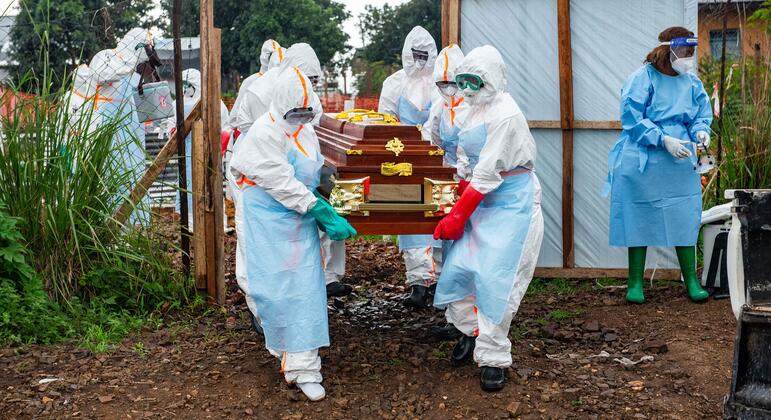
‘Ebola is winning’: Epidemic now killing one person every 30 minutes - UN News
Source: news.un.org
At a glance
Verified August 15, 2026Key Evidence
UN News directly reported both material elements of the claim: that the outbreak was the fastest-growing on record and that it was killing one person every 30 minutes.
Le Monde reported at least 2,128 deaths out of more than 4,500 confirmed cases by August 14, while PBS reported 2,011 deaths and 4,381 confirmed cases in an earlier account, demonstrating the outbreak's rapid growth.
WHO reported that 1,481 additional confirmed cases and 759 confirmed deaths had been recorded since its previous July 17 update.
The reporting
What the Evidence Shows
The core claim is supported by the available evidence.
- UN News reported in August 2026 that the outbreak in eastern Democratic Republic of the Congo was the fastest-growing Ebola outbreak on record and was killing approximately one person every 30 minutes.
- The Guardian, The Irish Times, PBS News, ABC News, and the Los Angeles Times independently described the outbreak as the fastest-growing recorded Ebola outbreak or the fastest-growing in the history of the virus.
- The reported death toll rose rapidly. UNICEF USA recorded 1,587 deaths as of July 30, while later reporting cited at least 2,000 deaths by August 11 and at least 2,128 deaths by August 14.
- The phrase “one person every 30 minutes” should be understood as a reported current or estimated rate, not necessarily as a precisely observed death at exactly 30-minute intervals. The supplied sources do not provide the calculation method behind that rate.
The outbreak was declared in the DRC on May 15, 2026, and involves the Bundibugyo virus strain. The available sources consistently place it in eastern DRC, although some reports identify affected provinces or locations more specifically.
Primary trail
Verified Sources10
Open source