The claim is false because South Korean researchers have demonstrated experimental reprogramming of certain colon-cancer cells toward a normal-like state, but this is not yet a proven treatment that turns cancer cells back to normal in patients.
False
Cancer cells can now turn back to normal cells, thanks to South Korean Scientists.
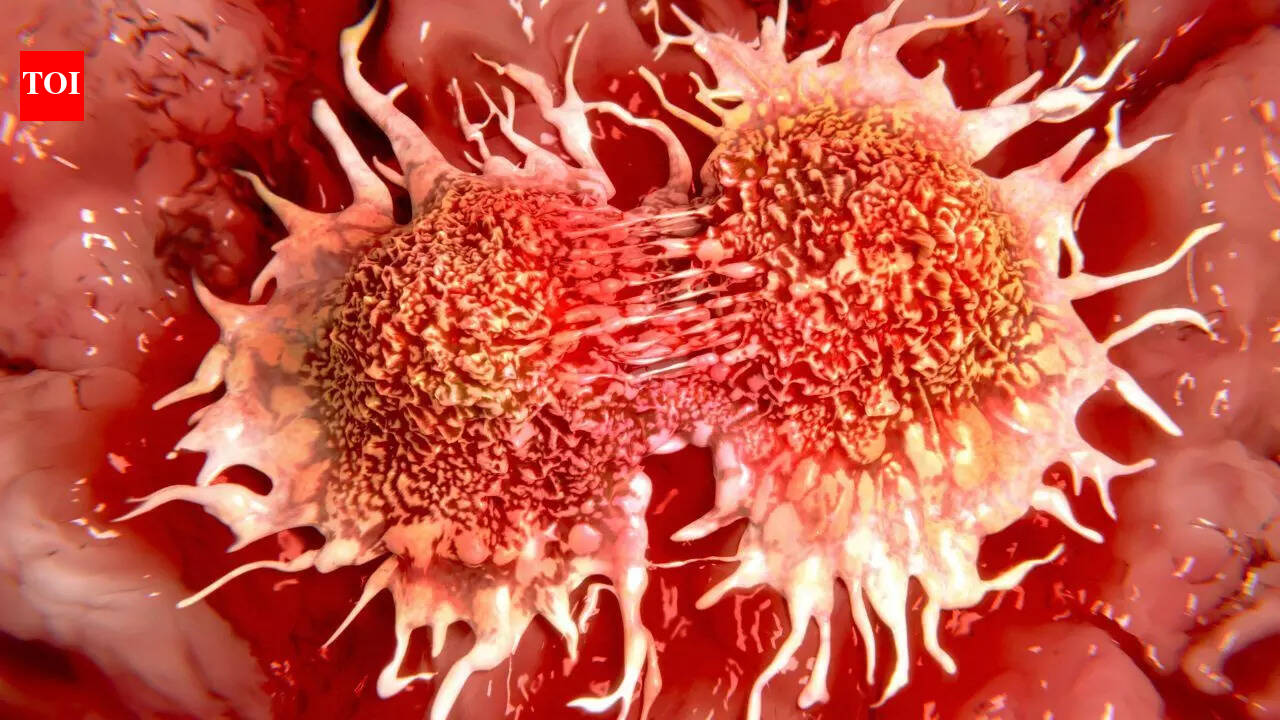
Cancer: A game-changer in cancer research? South Korean scientists reprogram tumour cells without chemotherapy or radiation - - The Times of India
Source: timesofindia.indiatimes.com
At a glance
Verified August 1, 2026Key Evidence
, and 10 consistently describe experimental work on colon-cancer cells rather than a general cure for cancer.
timesofindia.indiatimes.comtimesofindia.indiatimes.comCancer: A game-changer in cancer research? South Korean scientists reprogram...
economictimes.indiatimes.comeconomictimes.indiatimes.comcancer treatment: Big breakthrough in medical treatment: Korean scientists find...+3 more
specifically says the approach showed promise in laboratory tests and animal models, while reports changes in cell growth and behavior after selected genes were switched off.
oncodaily.comoncodaily.comSouth Korean Scientists at KAIST Reprogram Colon Cancer Cells in Breakthrough...
The supplied evidence does not show successful treatment of human patients.
The reporting
What the Evidence Shows
The sources describe an important but early-stage research finding associated with KAIST researchers. The reported methods, described variously as BENEIN or REVERT, use computational modeling and targeted genetic changes to influence cancer-cell behavior.
The evidence supports these narrower conclusions:
- Experiments involving colon-cancer cell lines reportedly caused cells to grow more slowly, become less aggressive, and display characteristics closer to healthy intestinal cells.
- The work is based primarily on laboratory experiments and computational analysis; some reporting also mentions animal-model testing, but the supplied summaries do not establish successful human clinical treatment.
- The phrase “turn cancer cells back to normal” overstates the finding. “Normal-like” or “reprogrammed” is more accurate than fully restored normal human tissue.
- The claim also generalizes from a specific cancer type, primarily colorectal/colon cancer, to cancer as a whole. Different cancers have distinct mutations, cell environments, and treatment challenges.
- No supplied source demonstrates regulatory approval, human clinical-trial efficacy, long-term safety, prevention of recurrence, or a currently available therapy.
The publication timing is also relevant. refers to KAIST work published in December 2024, while appears to be later coverage and reports on the reversion-switch research. Later media attention does not by itself establish that the technique has progressed into clinical care.timesofindia.indiatimes.comtimesofindia.indiatimes.comCancer: A game-changer in cancer research? South Korean scientists reprogram...
koreabiomed.comkoreabiomed.comKorean researchers find ‘reversion switch’ that turns cancer cells back to...+1 more
Primary trail
Verified Sources10
Open source