This claim is misleading because the cited CPI-based decline concerns a statistical health-insurance index rather than the premiums households actually pay, and the provided evidence refers to a 31% decline, not 33%.
Misleading
According to the US Government, the cost of health insurance has declined 33% over the last 4 years.
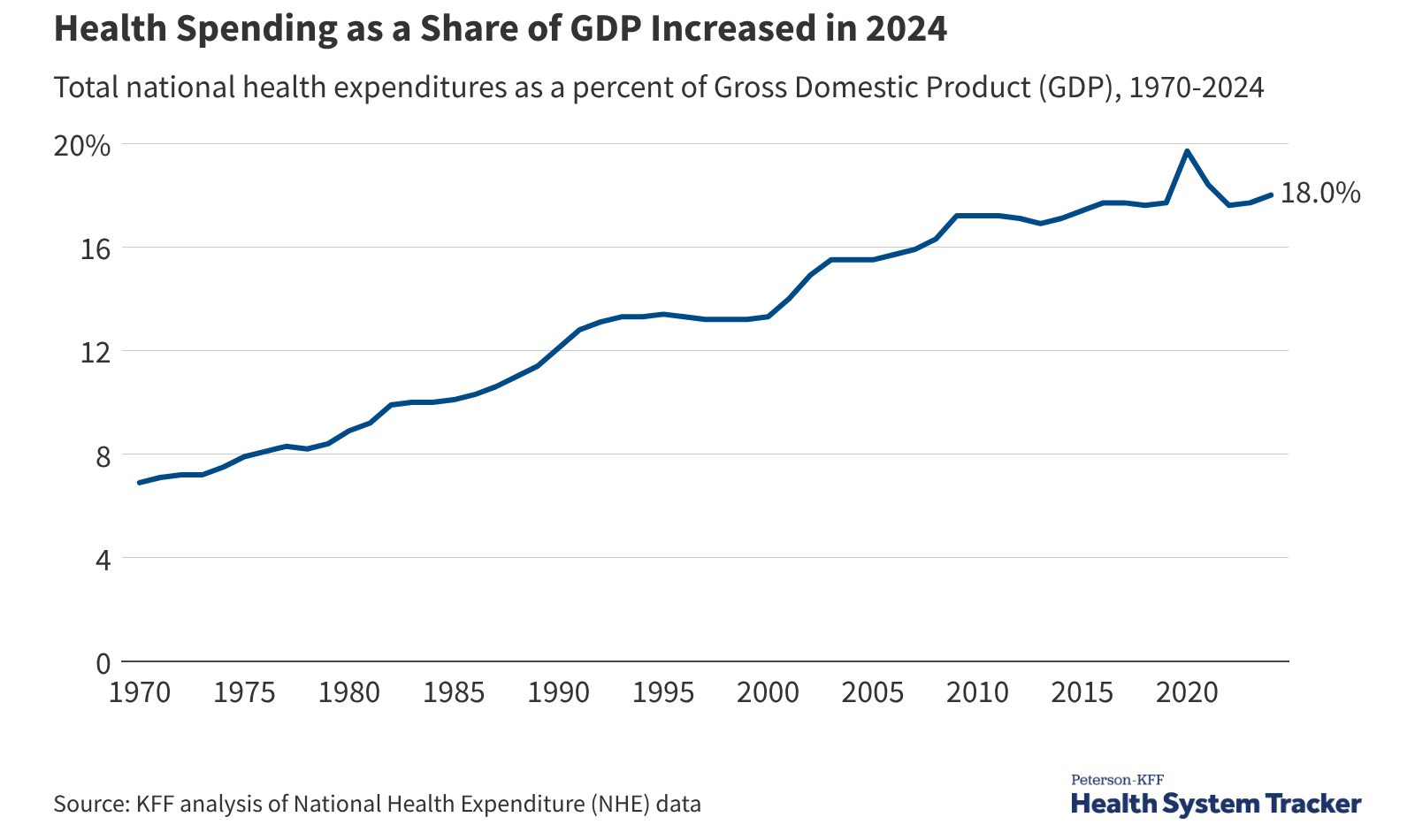
How has U.S. spending on healthcare changed over time? - Peterson-KFF Health System Tracker
Source: healthsystemtracker.org
At a glance
Verified August 13, 2026Key Evidence
Charlie Bilello’s post says the CPI-based decline was 31% over four years, not 33%.
The Heritage Foundation warns that the CPI health-insurance measure can give a misleading impression when treated as a direct measure of premiums.
Pharmacy Times, Peterson-KFF, KFF, and the Advisory Board material describe rising premiums, health-care spending, or affordability pressures rather than a broad 33% reduction in what consumers pay.
The reporting
What the Evidence Shows
The claim appears to refer to a widely discussed Consumer Price Index measurement. Charlie Bilello’s X post attributes a 31% four-year decline to U.S. Government CPI data, so the provided evidence does not support the stated 33% figure exactly.
More importantly, a CPI decline in the health-insurance category should not automatically be interpreted as a 33% reduction in insurance premiums or total health-care costs. The Heritage Foundation’s commentary specifically questioned the interpretation of a sharp CPI-reported decline, while the other provided sources describe rising premiums, medical costs, and affordability problems.
The evidence therefore supports a narrower statement: a particular government statistical index for health insurance reportedly declined substantially over the relevant period. It does not establish that Americans’ actual insurance premiums declined by 33% over four years. The sources also do not provide the underlying U.S. Bureau of Labor Statistics table or the exact start and end months, which limits precise verification of the four-year calculation.
Primary trail
Verified Sources10
Open source