Multiple studies provide evidence that people with depression exhibit altered T cell functioning, including changes in T cell activation, regulatory T cell deficits, and shifts in T cell subpopulations.
True
People with depression have altered T cell functioning
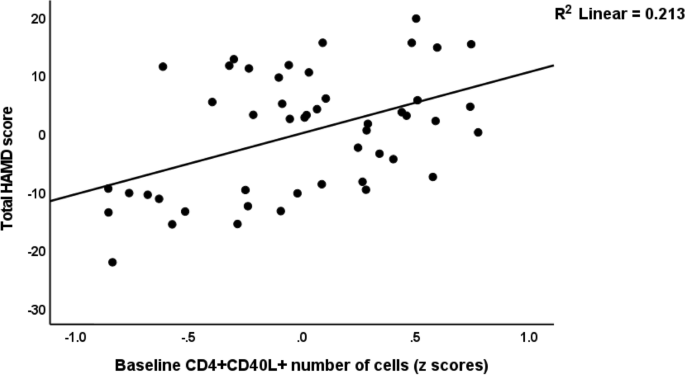
T cell activation and deficits in T regulatory cells are associated with major depressive disorder and severity of depression - Scientific Reports
Source: nature.com
At a glance
Verified September 20, 2025Key Evidence
Scientific Reports found T cell activation and regulatory T cell deficits linked to major depressive disorder severity.
nature.comnature.comT cell activation and deficits in T regulatory cells are associated with major...
Cellular and Molecular Life Sciences observed increased Th17-like cells and decreased regulatory T cells in depressed patients.
link.springer.comlink.springer.comMajor depression favors the expansion of Th17-like cells and decrease the...
Frontiers articles further support immune dysregulation involving T cells in depression.
frontiersin.orgfrontiersin.orgFrontiers
The reporting
What the Evidence Shows
The scientific literature consistently supports the claim that depression is associated with altered T cell functioning. Several studies have documented specific changes in T cell subsets and their activity in individuals with major depressive disorder (MDD). For example, reports increased T cell activation alongside deficits in regulatory T cells (Tregs) correlating with depression severity.nature.comnature.comT cell activation and deficits in T regulatory cells are associated with major...
highlights an expansion of pro-inflammatory Th17-like cells and a decrease in CD39+ Treg subsets in depressed patients, particularly in the context of multiple sclerosis.sciencedirect.comsciencedirect.comReduced numbers of naïve CD4 + T cells and an altered CD4/CD8 balance in... notes altered CD4/CD8 T cell balance and reduced naïve CD4+ T cells in depressed patients with immune deficiencies. Additional sources emphasize the role of immune dysregulation and specifically regulatory T cells in depression's pathophysiology.
link.springer.comlink.springer.comMajor depression favors the expansion of Th17-like cells and decrease the...+4 more
Moreover, discusses the immunological roots of depression and the potential for immune-targeted therapies, reinforcing the biological relevance of these T cell alterations. While some studies focus on specific subtypes or comorbid conditions (e.g., postpartum depression in or bipolar disorder in ), the overarching theme is that depression involves measurable changes in T cell function and phenotype.nature.comnature.comImmune targets for therapeutic development in depression: towards precision...
sciencedirect.comsciencedirect.comT-cell defects and postpartum depression+1 more
These findings collectively indicate that altered T cell functioning is a characteristic feature of depression rather than an incidental or unverified association.
Primary trail
Verified Sources10
Open source