Evidence supports the general finding that comparable electric vehicles often have lower lifetime greenhouse-gas emissions than gasoline vehicles, with results varying by electricity mix and other conditions. However, the supplied record does not confirm that the specific comparison includes battery-material extraction, cell production, and pack manufacturing, a central condition of the claim.
Unverified
Electric vehicles produce fewer lifetime greenhouse-gas emissions than comparable gasoline-powered cars, even when battery manufacturing is included.
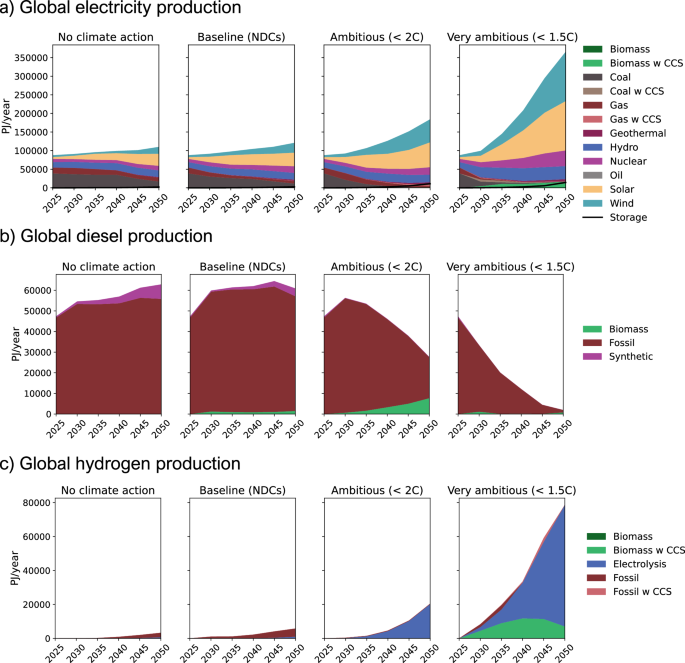
Battery electric vehicles show the lowest carbon footprints among passenger cars across 1.5–3.0 °C energy decarbonisation pathways | Communications Earth & Environment
Source: nature.com
At a glance
Verified August 20, 2026Key Evidence
MIT reported in May 2026 that electric vehicles produce fewer greenhouse-gas emissions than comparable gas-powered vehicles, while identifying regional electricity, climate, congestion, and driving-pattern differences.
A February 2026 lifecycle study comparing electric and gasoline vehicles supports the general lower-emissions direction and highlights the importance of electricity-grid conditions.
The supplied description of the 2025 lifecycle model does not explicitly confirm that battery-material extraction, cell production, and pack manufacturing are included in the reported comparison.
The reporting
What the Evidence Shows
The comparative proposition is supported in general. A February 2026 lifecycle study and an MIT assessment published in May 2026 report lower greenhouse-gas emissions for comparable electric vehicles than for gasoline-powered vehicles, while noting variation linked to regional climate, electricity sources, congestion, and driving patterns. Other supplied studies likewise report favorable lifetime results for battery-electric vehicles and identify grid intensity as an important factor.
The decisive methodological condition remains unresolved. The supplied description of the 2025 Communications Earth & Environment study refers to a probabilistic lifecycle model covering multiple vehicle configurations, but does not explicitly document whether the reported comparison includes battery-material extraction, cell production, and pack manufacturing. The record supports the relevance of those emissions, but not their inclusion in the particular comparison underlying the claim. The evidence establishes a general comparative direction, not that the stated battery-inclusive comparison has been verified.
Primary trail
Verified Sources8
Open source