Verdict: Insufficient Evidence. Evidence supports natural filtration by mussels and indicates that some restoration projects may improve water quality, but it does not establish the claim for New Zealand mussel farms generally or show that the overall process uses no chemicals.
Insufficient Evidence
New Zealand uses mussel farms to naturally cleanse seawater, improving ocean health without any chemicals.
What was submitted
The Claim
New Zealand uses mussel farms to naturally cleanse seawater, improving ocean health without any chemicals.
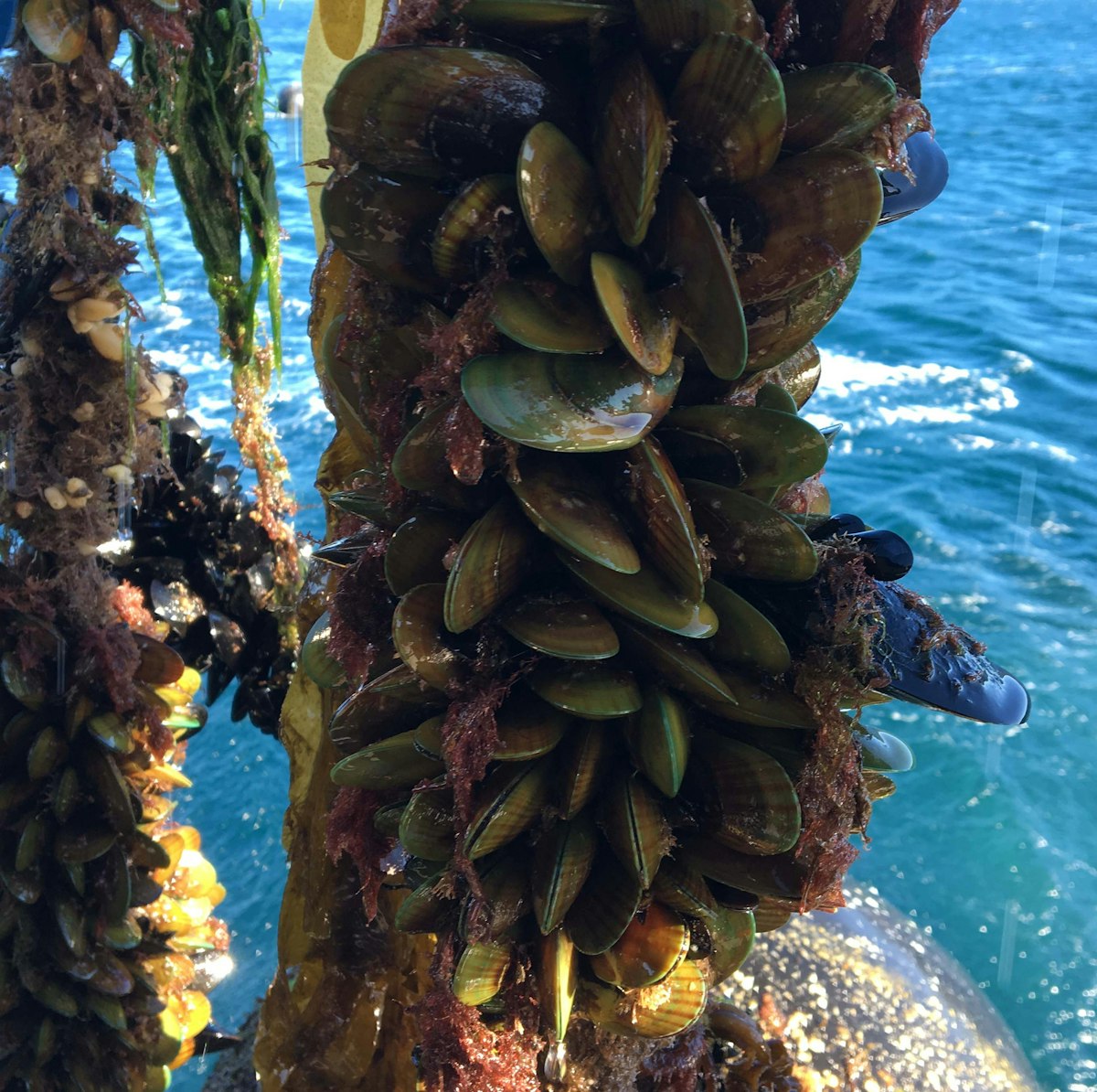
New Zealand’s green-lipped mussel industry
Source: sciencelearn.org.nz
At a glance
Verified August 12, 2026Key Evidence
Mussels are filter feeders that remove phytoplankton and sediments from seawater, which supports the claim that they can cleanse water through a natural biological process.
Most New Zealand green-lipped mussels are sourced from farms, while NIWA describes a water-cleaning role for mussel farms as a possibility still under investigation.
The reporting
What the Evidence Shows
What is established
Research statements describe restorative aquaculture as capable of improving ocean health, and a New Zealand mussel-reef restoration project is described as enhancing water quality and marine-life diversity.
Context and caveats
The reported benefits vary according to farm location and farming practices, so the evidence does not support a generalized conclusion about all New Zealand mussel farms.
The evidence describes biological filtration and sediment-bacteria denitrification, but it does not establish that New Zealand's overall mussel-farm seawater-cleansing process uses no chemicals; one cited natural-filtration example concerns proposed freshwater-lake applications rather than a generalized marine-farm process.
The approved evidence does not establish whether any chemicals are used in the overall mussel-farm process.
The extent to which water-quality or ocean-health benefits apply across New Zealand mussel farms is not established and may vary by location and farming practices.
Primary trail
Verified Sources9
Open source