The New York Times has reported on and effectively rejected the Trump administration's new Pentagon rule requiring reporters to obtain Pentagon approval before publishing information.
True
The New York Times has REJECTED the Trump/Hegseth new rule that all reporting needs to be "approved" by the Pentagon before publishing.
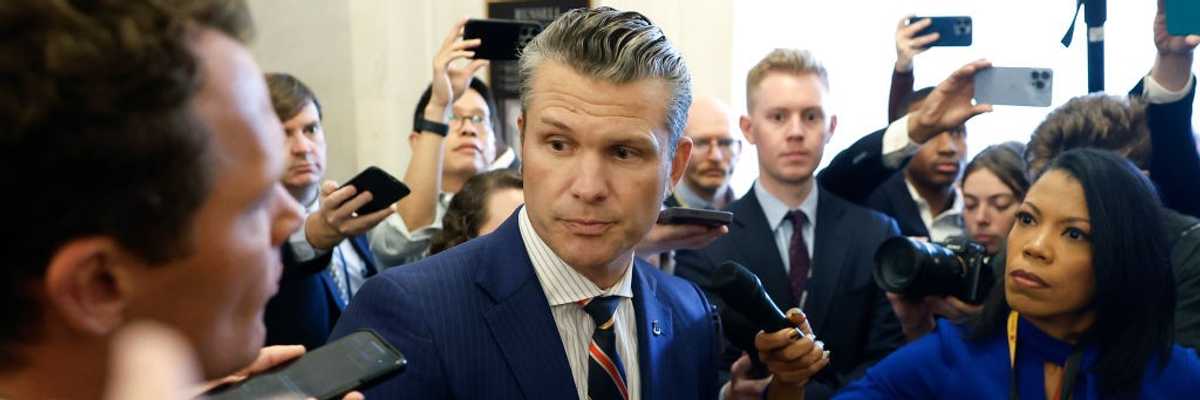
Trump's New Restrictions on Pentagon Reporters 'Should Alarm Every American' | Common Dreams
Source: commondreams.org
At a glance
Verified September 21, 2025Key Evidence
The New York Times published an interactive report detailing the Pentagon's new restrictions on reporters, emphasizing the requirement for prior authorization and consequences for violations.
nytimes.comnytimes.comRead the Pentagon’s New Restrictions on Reporters
NPR reported on Defense Secretary Hegseth's new pledge requirement for journalists at the Pentagon.
npr.orgnpr.orgDefense Secretary Hegseth requires new 'pledge' for reporters at the Pentagon
Press freedom groups and media outlets like Common Dreams and Alternet.org expressed alarm at these restrictions, underscoring widespread rejection within journalistic circles.
commondreams.orgcommondreams.orgTrump's New Restrictions on Pentagon Reporters 'Should Alarm Every American'
alternet.orgalternet.org'Alarm every American': Red flag raised on new Trump restrictions on Pentagon...
The reporting
What the Evidence Shows
Multiple sources confirm that the Trump administration, under Defense Secretary Pete Hegseth, introduced a new policy requiring Pentagon reporters to sign a pledge agreeing to only report information authorized for release by the Pentagon. This policy includes revoking press passes for non-compliance and forbids gathering unauthorized information, even if unclassified. The New York Times explicitly covered these restrictions and highlighted the implications for press freedom, effectively rejecting the legitimacy of such a rule by framing it as a severe limitation on independent journalism.
Other media outlets and press freedom advocates echoed concerns about the policy's impact on transparency and independent reporting. There is no evidence that The New York Times accepted or endorsed this rule; rather, their coverage and tone indicate opposition to it.
Primary trail
Verified Sources10
Open source