The claim is misleading because President Trump declined to rule out declaring a national emergency after being prompted about using one to control the 2026 midterm elections, but the available evidence does not show that he definitively said he was considering or would seize the elections.
Misleading
Trump said he is considering declaring a national emergency and seizing the midterm elections.
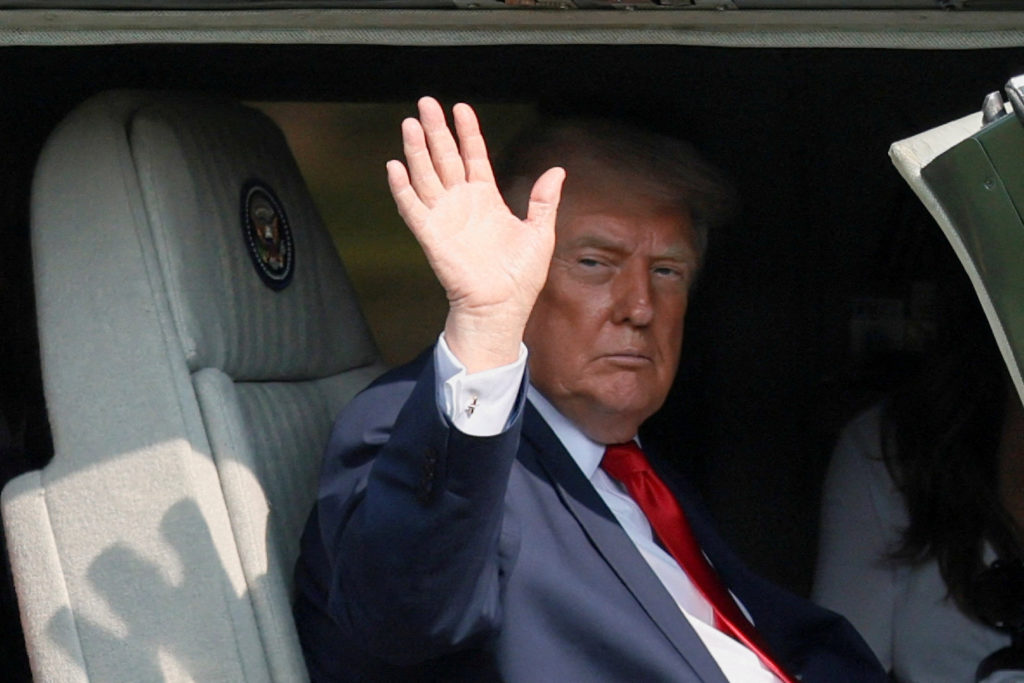
Trump setting stage to declare emergency around midterms, former White House attorney says - PBS News
Source: pbs.org
At a glance
Verified August 20, 2026Key Evidence
CNN and USA on August 20, 2026 reported on August 11, 2026, that Trump declined to rule out declaring a national security emergency after an interviewer suggested using one to take action on voting.
Newsweek likewise characterized his answer as vague.
The available reports do not show a formal declaration, executive order, or completed seizure of election control.
Earlier February reports said Trump denied considering such a plan, while later commentary interpreted his August remarks as leaving the option open.
The reporting
What the Evidence Shows
The most recent reporting, published in August 2026, supports a narrower account: President Donald Trump was asked about declaring a national security emergency to take executive action on voting, and he responded that "stranger things have happened" rather than directly endorsing or rejecting the idea. CNN, USA Today, Newsweek, and The New Republic describe this as declining to rule out the possibility or giving a vague response, not as announcing a plan to seize the elections.
The phrase "seizing the midterm elections" is also a loaded characterization. The reports describe a possible attempt to assert greater federal control over election administration or impose voting-related measures, including restrictions involving mail ballots and voter identification. They do not establish that Trump had formally decided to take control of the elections, issued an executive order, or actually interfered with the 2026 election process.
Earlier reporting from February 2026 provides important context. PBS News and The Hill reported that Trump denied considering a draft executive order or national emergency for this purpose, although a lawyer, Peter Ticktin, publicly argued that such authority could be used and claimed coordination with White House officials. That earlier denial conflicts with the later refusal to rule out the idea, but neither establishes that Trump formally decided to declare an emergency.
A July 2026 PBS report quoted a former White House attorney who believed Trump's speech was laying groundwork for a possible emergency declaration around the elections. That is an expert interpretation and does not prove that Trump had made such a decision. Similarly, The Independent's August report described an unresolved possibility rather than a completed action.
The most accurate formulation is that Trump publicly left open the possibility of declaring a national security emergency that could be used to pursue greater federal control over voting or election administration. The evidence does not support stating as an established fact that he said he was considering seizing the midterm elections.
Primary trail
Verified Sources10
Open source