Kingfishers use visual adaptations to compensate for the reflection and refraction of light at the water surface, enabling them to accurately judge the depth and position of prey underwater.
True
Kingfishers compensate for the reflection and refraction of water to pinpoint the depth and position of prey underwater.
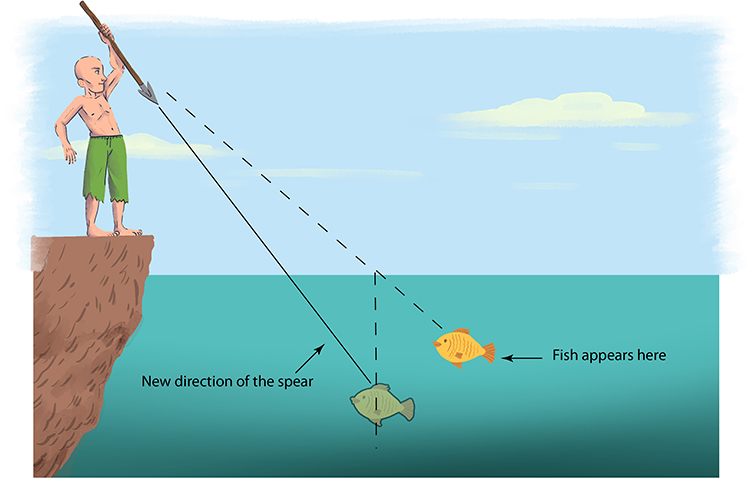
Refraction and fishermen
Source: schoolphysics.co.uk
At a glance
Verified July 25, 2025Key Evidence
Kingfishers use binocular vision and specialized eye structures to adjust for light refraction at the water surface, enabling accurate prey targeting.
cablemuseumnaturalconnections.blogspot.comcablemuseumnaturalconnections.blogspot.comnatural connections: Kingfisher Their hunting behavior from high perches involves judging depth and compensating for optical distortions caused by water.
schoolphysics.co.ukschoolphysics.co.ukRefraction and fishermen+1 more
The reporting
What the Evidence Shows
The claim states that kingfishers compensate for reflection and refraction of water to pinpoint prey underwater, which involves understanding how light bends when passing from air into water, causing fish to appear closer or at a different position than they actually are. Multiple sources confirm that kingfishers have evolved specialized visual mechanisms to overcome this optical distortion. For example, kingfishers use binocular vision to align visual cues and adjust for refraction, allowing precise targeting of prey despite the apparent displacement caused by light bending.
Additionally, their eyes contain two focal points that help them adjust for changes in refraction between air and water during dives. Observations also note that kingfishers judge depth from high perches and compensate for these optical effects to make accurate plunges.schoolphysics.co.ukschoolphysics.co.ukRefraction and fishermen The presence of a nictitating membrane protects their eyes underwater without blocking vision, supporting their hunting efficiency.
clarkeva.comclarkeva.comAs the Crow Flies: Kingfishers Make A Big Splash+1 more
The physics of refraction at the water surface is well understood and explains why compensation is necessary.teacherplus.orgteacherplus.orgThe world of kingfishers Overall, the evidence supports the claim that kingfishers actively compensate for reflection and refraction to locate prey accurately underwater. There is no credible contradictory evidence found.
The claim is consistent with current biological and physical understanding.
Primary trail
