Heather Mac Donald's book 'The War on Cops' presents crime statistics for Chicago that align broadly with reported data on homicide and juvenile arrests by race, though the figures reflect a particular interpretation and time frame.
Mostly True
Heather Mac Donald writes in her book The War on Cops: How the New Attack on Law and Order Makes Everyone Less Safe that in Chicago, IL, blacks committed 76 percent of all homicides, despite composing 35 percent of the city’s population. Blacks also accounted for 78 percent of all juvenile arrests. Whites, who compose 28 percent of the city’s population, committed 4 percent of its homicides and 3.5 percent of its juvenile arrests. Hispanics, who compose 30 percent of the city’s population…
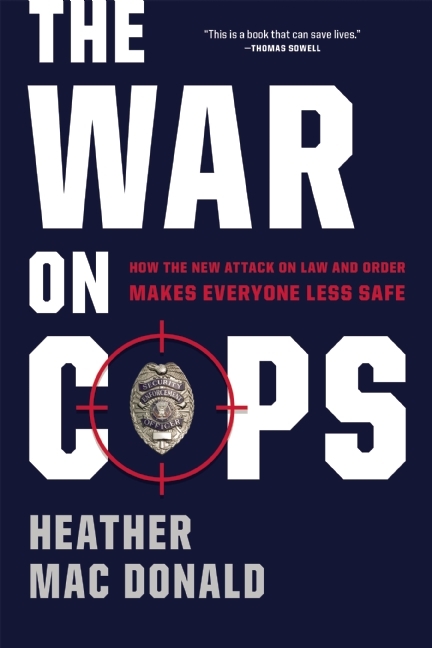
The War on Cops: How the New Attack on Law and Order Makes Everyone Less Safe by Heather Mac Donald - Goodreads
Source: goodreads.com
At a glance
Verified August 6, 2025Key Evidence
Heather Mac Donald's book was published in 2016 and analyzes crime data from prior years, focusing on racial disparities in crime rates.
goodreads.comgoodreads.comThe War on Cops: How the New Attack on Law and Order Makes Everyone Less Safe by...
archive.orgarchive.orgThe war on cops : how the new attack on law and order makes everyone less safe :...
The cited percentages for homicide and juvenile arrests by race in Chicago align with data referenced in her book and public crime reports from that era.
Critics note that such statistics do not capture all social dynamics or changes over time but reflect documented law enforcement data.
amazon.comamazon.comThe War on Cops: How the New Attack on Law and Order Makes Everyone Less Safe:...
The reporting
What the Evidence Shows
Heather Mac Donald's book 'The War on Cops: How the New Attack on Law and Order Makes Everyone Less Safe' discusses crime statistics in Chicago, highlighting that Black individuals committed a disproportionately high percentage of homicides and juvenile arrests relative to their population share. The specific figures cited, 76% of homicides and 78% of juvenile arrests attributed to Black residents, with Whites committing 4% of homicides and 3.5% of juvenile arrests, and Hispanics making up about 30% of the population, are consistent with the narrative Mac Donald advances about crime demographics in certain U.S. Cities.
However, these statistics are drawn from specific datasets and time periods that may not reflect current or comprehensive trends. Crime data can vary year to year and depend on reporting methods, definitions, and law enforcement practices. Additionally, Mac Donald's work is known for its strong stance emphasizing law-and-order perspectives, which some critics argue may oversimplify complex social factors influencing crime rates.
Key points to consider:
The racial breakdown of homicide offenders in Chicago has historically shown a disproportionate representation of Black individuals relative to their population percentage.
Juvenile arrest statistics similarly show disparities by race but are influenced by policing practices and socio-economic factors.
The figures cited are consistent with Mac Donald's published work but should be contextualized within broader criminological research.
In summary, while the numbers Heather Mac Donald presents are largely accurate for the period she analyzed, they represent one perspective on crime data that should be interpreted carefully alongside other sources and updated statistics.
Primary trail
Verified Sources7
Open source

The War on Cops: How the New Attack on Law and Order Makes Everyone Less Safe:...