Historical evidence indicates that multiple proposals for a two-state solution were offered to Arab and Palestinian leaders over the past 80+ years, which they declined, contributing to the absence of an established Palestinian state alongside Israel.
Mostly True
If accepted, the two states of Israel and Palestine could have been 80 years old by now, but the Arabs said no, and no, and no, and no again.
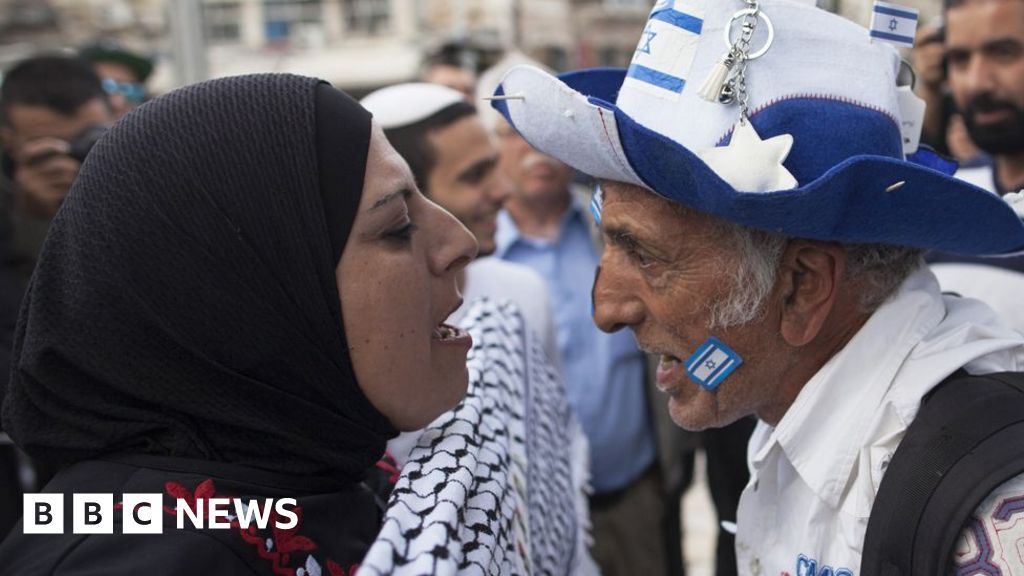
Israel and the Palestinians: History of the conflict explained
Source: bbc.com
At a glance
Verified September 2, 2025Key Evidence
The 1947 UN Partition Plan offered separate Jewish and Arab states; Jewish leaders accepted it, Arab leaders rejected it.
bbc.combbc.comIsrael and the Palestinians: History of the conflict explained
Multiple offers of statehood to Palestinians were declined from 1936 onward.
cija.cacija.caMyth: The Palestinians have never had the opportunity to establish their own...
The PLO only accepted a two-state solution in 1988 after decades of conflict.
ajc.orgajc.orgTimeline: Key Events in the Israel-Arab and Israeli-Palestinian Conflict
The reporting
What the Evidence Shows
The claim that if accepted, Israel and Palestine could have been two states for about 80 years aligns with the timeline starting from the British Mandate period and the 1947 UN Partition Plan. The UN proposed partitioning Palestine into separate Jewish and Arab states in 1947, which Jewish leaders accepted but Arab leaders rejected.bbc.combbc.comIsrael and the Palestinians: History of the conflict explained
un.orgun.orgHistory of the Question of Palestine
Multiple sources confirm that Arab and Palestinian leaders repeatedly declined offers for statehood or two-state arrangements. For example, CIJA notes several offers from 1936 onward were refused by Arab leadership.cija.cacija.caMyth: The Palestinians have never had the opportunity to establish their own... Similarly, the American Jewish Committee timeline highlights that the Palestine Liberation Organization (PLO) only accepted a two-state framework in 1988, decades after Israel’s establishment.
ajc.orgajc.orgTimeline: Key Events in the Israel-Arab and Israeli-Palestinian Conflict
The BBC and other sources explain that Arab rejection was based on objections to perceived unfair land allocations favoring Jews despite their smaller population at the time.bbc.combbc.comIsrael and the Palestinians: History of the conflict explained This rejection led to conflict rather than peaceful coexistence.
However, some sources emphasize complexity beyond simple refusal. The Hoover Institution points out that irreconcilable national aspirations and mutual non-recognition have also played major roles in preventing a two-state solution.hoover.orghoover.orgWhy Is There No Palestinian State? Additionally, peace process failures involved issues on both sides.
ciaotest.cc.columbia.educiaotest.cc.columbia.eduWhat Went Wrong? The Collapse of the Israeli-Palestinian Peace Process
Online discussions (e.g., Reddit) reflect popular narratives that Arab rejection of partition plans contributed to the current situation but also note that subsequent wars and political developments further complicated statehood prospects.reddit.comreddit.comr/IsraelPalestine on Reddit: Wouldn't Palestine be a state by now and have more...
In summary, while it is accurate that Arab leaders rejected early proposals for two states, thus delaying Palestinian statehood, the broader historical context includes multiple factors such as mutual distrust, wars, and political dynamics. The statement simplifies a complex history but is substantially supported by documented events.
Primary trail
Verified Sources7
Open source